

Screen‑Time Guidance for Under‑5s: Balancing Digital Play and Real‑World Learning
In today’s connected world, children encounter screens earlier than ever. TV programmes, tablets and smartphones can keep toddlers entertained and even support learning, but the latest research shows that too much passive screen time can crowd out play, language interactions and physical activity.
The UK government recently announced it will publish its first official guidance on screen use for under‑fives in April 2026, following a report that found 98 % of two‑year‑olds watch screens on a typical day and those who watched the most (around five hours a day) had poorer vocabulary and more emotional and behavioural difficulties. This post summarises what leading organisations such as the World Health Organization (WHO) recommend, explores why limiting screen time matters, and explains how WMB Childcare helps families strike a healthy balance.
Why screen‑time limits matter
1. Brain development and language
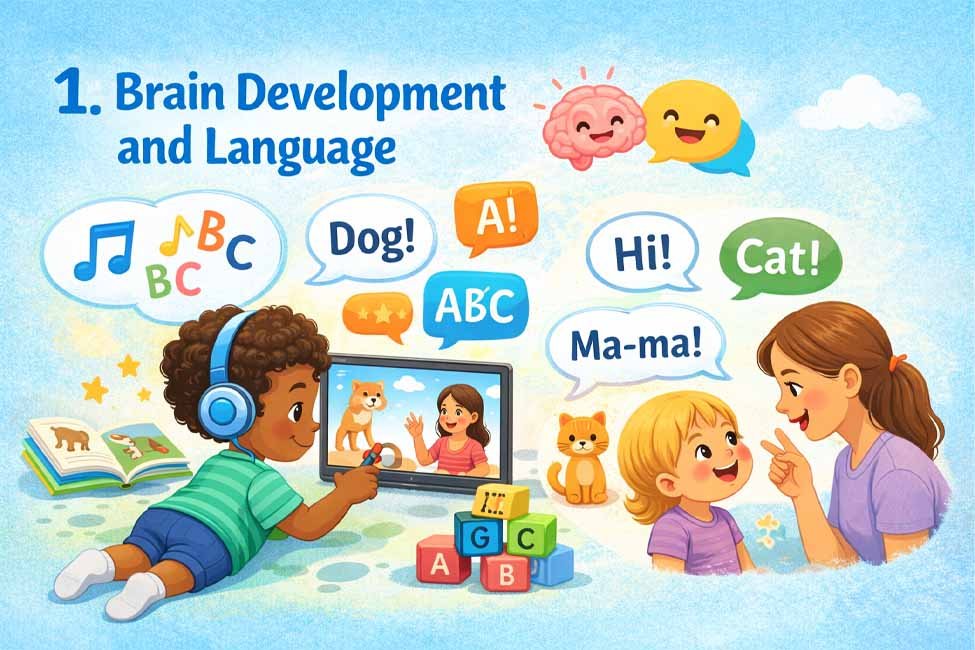
Early childhood is a period of rapid brain growth. Babies and toddlers learn language through serve‑and‑return interactions, such as exchanging sounds, eye contact and smiles. Speech and language experts warn that excessive screen use can replace this vital interaction; researchers found that children in the highest screen‑time group (about five hours/day) could say just 53 % of the test words compared with 65 % among children who watched around 44 minutes per day.
A Guardian analysis of the government‑commissioned report noted that two‑year‑olds who spent the most time on screens had a limited vocabulary and were twice as likely to show signs of emotional and behavioural difficulties
2. Social and emotional skills
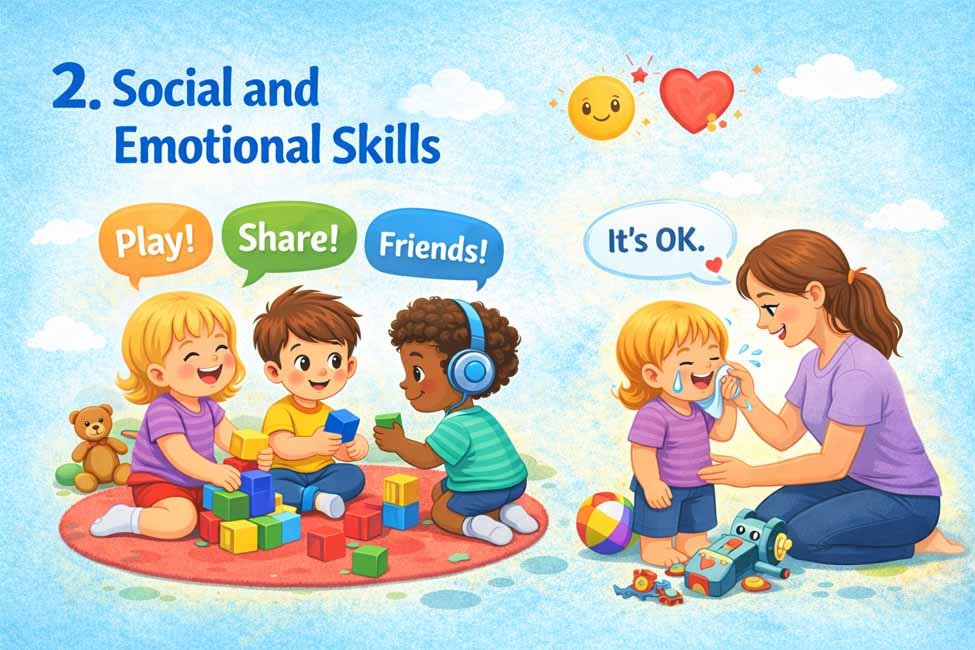
Screens can offer engaging stories, but they do not replace playing with caregivers and peers. The WHO says toddlers need interactive floor‑based play and other activities to develop social and emotional skills. . Parents and educators across the UK report that some children struggle with attention, problem‑solving and turn‑taking after spending long periods on devices.
WMB Childcare’s educators see the benefits of play first‑hand, noting that face‑to‑face interactions, imaginative play and outdoor activities help children build empathy, cooperation and resilience.
3. Physical health and sleep

Sedentary screen use is linked to lower physical activity and disrupted sleep. The WHO guidelines stress that under‑fives should not be restrained for more than an hour at a time and should enjoy varied physical activities for at least 180 minutes daily. Too much screen time also correlates with higher sedentary behaviour and potential weight gain. Establishing routines that prioritise active play and good sleep hygiene supports healthy growth.
What do the guidelines say?
The WHO’s Guidelines on Physical Activity, Sedentary Behaviour and Sleep for Children under 5 Years provide the most comprehensive evidence‑based recommendations:
| Age group | Recommended screen time | Activity & sleep recommendations |
|---|---|---|
| Infants (0‑1 year) | No screen time. Babies should not be restrained for more than an hour at a time; when sedentary, they should engage in reading or storytelling with a caregiver. | Encourage interactive floor‑based play and at least 30 minutes of tummy time each day. Sleep: 14–17 hours (0–3 months) or 12–16 hours (4–11 months) including naps. |
| 1‑2 years | No screen time for one‑year‑olds; for two‑year‑olds, limit sedentary screen time to no more than one hour, and less is better. Interactive reading and storytelling are encouraged. | At least 180 minutes of physical activity of any intensity spread across the day; avoid restraining for more than an hour. Sleep: 11–14 hours including naps. |
| 3‑4 years | Limit sedentary screen time to no more than one hour per day. | Children should engage in at least 180 minutes of physical activities, including 60 minutes of moderate‑to‑vigorous activity spread throughout the day. Sleep: 10–13 hours with a consistent bedtime. |
These recommendations align with research showing that moderate screen use paired with rich human interaction and movement leads to better language, cognitive and physical outcomes.
Understanding the UK context
Although formal UK guidance for under‑fives is forthcoming, the Department for Education’s Children of the 2020s study provides insights into current behaviours. It found that 98 % of two‑year‑olds watch screens daily, with an average screen time of 127 minutes. Only 34 % met the WHO’s recommendation of under one hour, and nearly one‑fifth of toddlers play video games for an average of 140 minutes.
Screen time was higher among children from lower‑income families and those whose primary caregiver had symptoms of depression. The same research linked high screen use (around five hours/day) to lower vocabulary and a two‑fold increase in emotional and behavioural problems. These findings underscore the need for practical, non‑judgemental guidance that recognises the realities of modern family life.
WMB Childcare’s commitment to balanced digital use
At WMB Childcare, we acknowledge that digital media is part of everyday life, but we also champion the importance of play and human connection. Our blog “Balancing Screen Time and Playtime: Tips for Parents” emphasises that while technology can offer educational benefits, traditional play remains crucial for healthy development. WMB’s recommendations include:
✔️ Why balance matters – We explain that too much screen time can lead to sedentary behaviour, limit face‑to‑face interactions and imaginative play, and hinder attention span and cognitive development.
✔️ Setting limits – We encourage families to establish clear rules for daily screen use, treat screen time as a reward after other activities, create screen‑free zones in the home, and model healthy screen habits.
✔️ Choosing quality content – WMB advises selecting age‑appropriate educational apps and games, limiting passive viewing in favour of interactive programmes, and regularly reviewing content to ensure it aligns with family values.
✔️ Encouraging play – We suggest providing variety (toys, books and art supplies) to stimulate creativity, promoting outdoor play for physical activity and social interaction, and balancing structured and unstructured play.
✔️ Monitoring and adjusting – Our guidance reminds parents to observe behavioural changes, adapt limits based on their child’s needs and involve children in discussions about screen habits
In our nurseries, screen use is minimal and purposeful. Children engage in hands‑on learning through sensory play, music, art, storytelling and outdoor exploration. Staff use tablets sparingly to document learning experiences and share them with families rather than as entertainment tools. By focusing on real‑world interaction and open‑ended play, we help children develop the communication, motor and self‑regulation skills they need to thrive.
Practical tips for parents
Finding the right balance involves making intentional choices that work for your family’s routine. Here are some practical strategies, drawn from research and WMB Childcare’s experience:
✔️ Create screen‑time routines – Decide when screens are allowed (e.g., after meals, not before bed) and stick to consistent limits. Use built‑in timers on devices to enforce breaks.
✔️ Watch together and talk – When your child is using a screen, sit with them. Comment on what you see, ask questions and relate it to their own experiences. Co‑viewing helps transform screen time into a language‑rich activity and strengthens bonds.
✔️ Prioritise quality over quantity – Choose programmes and apps that are interactive, educational and appropriate for your child’s developmental stage. Avoid background TV, which can distract children from play and conversation.
✔️ Designate screen‑free spaces – Keep bedrooms and dining areas free of screens to encourage healthy sleep and family interaction. Charge devices in a communal area at night.
✔️ Offer appealing alternatives – Provide easy access to books, puzzles, blocks, art supplies and outdoor play. Rotate toys to maintain interest and inspire imaginative games.
✔️ Model healthy habits – Children learn by watching adults. Show them that you can put your phone away during meals and playtime. Use your own screen breaks to read, cook or take a walk together.
✔️ Collaborate with caregivers and nurseries – Communicate with your child’s nursery or childminder about their screen‑time policies. At WMB, we’re happy to share our approaches and work with families to create consistent routines across home and nursery.
✔️ Be flexible and compassionate – Recognise that there will be days when screens are necessary (e.g., when a parent is ill or working from home). Temporary increases in screen time are not harmful if balanced with plenty of play and engagement on other days. Avoid guilt; instead, focus on small steps towards healthier habits.
Looking ahead
The forthcoming UK guidance for under‑fives is a welcome step towards clearer expectations and support for parents. Education Secretary Bridget Phillipson stresses that parents are not asking whether to use screens but how to use them well. Research from New Zealand and other countries suggests that more than 90 minutes of screen time per day is associated with below‑average vocabulary, communication and numeracy. The government’s working group, led by the Children’s Commissioner and Professor Russell Viner, aims to develop practical, evidence‑based guidance that acknowledges modern realities and supports early language, social and physical development.
At WMB Childcare, we will continue to monitor national and international research and adjust our practices accordingly. Our mission is to provide a loving, stimulating environment where children can grow through human connection, imaginative play and purposeful activities, with technology used thoughtfully and sparingly. We believe that by working together, families, nurseries and policymakers can help every child develop healthy relationships with screens and the world around them.
✨ Secure Your Child’s Place
Spaces are limited for our new term. Give your child the best possible start in a caring, stimulating environment where their confidence and skills will blossom.
📞 Call us today: 0161 205 9067
📧 Email: info@wmbchildcare.co.uk