Common Childhood Illnesses: What's Normal at Every Age?
This article is for informational purposes only and does not replace professional medical advice. Always consult your GP or contact NHS 111 if you have concerns about your child’s health.
Sources: NHS England, NHS.uk, Gov.uk | Updated March 2026
Every parent knows the feeling: your child wakes up with a rash, a rattling cough, or a temperature — and the worry sets in fast. The good news is that most childhood illnesses are a completely normal part of growing up, and the vast majority can be managed safely at home.
Almost all babies, toddlers and children will get common childhood illnesses like chickenpox, colds, sore throats and earache at some point. Some of these are easily treated at home with advice from your pharmacist, GP or health visitor — rather than a trip to your surgery or A&E.
This guide walks you through the most common illnesses your child may encounter, what symptoms to look out for, and exactly when to seek help.
Can Childhood Illnesses Be Prevented?
While you can’t keep every germ at bay, there are proven steps that significantly reduce your child’s risk of serious illness.
The single most effective tool is the NHS vaccination programme — a free schedule of immunisations that begins at 8 weeks old and protects against diseases like measles, meningitis, and whooping cough.
Beyond vaccines, everyday habits make a real difference:
✔️ Handwashing — Teaching children to wash hands for 20 seconds with soap and water is one of the most effective ways to stop infections spreading.
✔️ Rest and sleep — Children need significantly more sleep than adults. Adequate rest supports immune development and resilience.
✔️ Balanced nutrition — A varied diet rich in fruit, vegetables and whole foods supports immunity and healthy gut bacteria.
✔️ Fresh air and outdoor play — Regular outdoor time supports physical health and helps children build natural resistance.
The Most Common Childhood Illnesses
According to NHS England, millions of parents searched for advice on childhood illnesses in 2024 — with hand, foot and mouth disease, slapped cheek syndrome and chickenpox among the most looked-up conditions. Here is a clear guide to the illnesses you are most likely to encounter.
1. Colds and Coughs
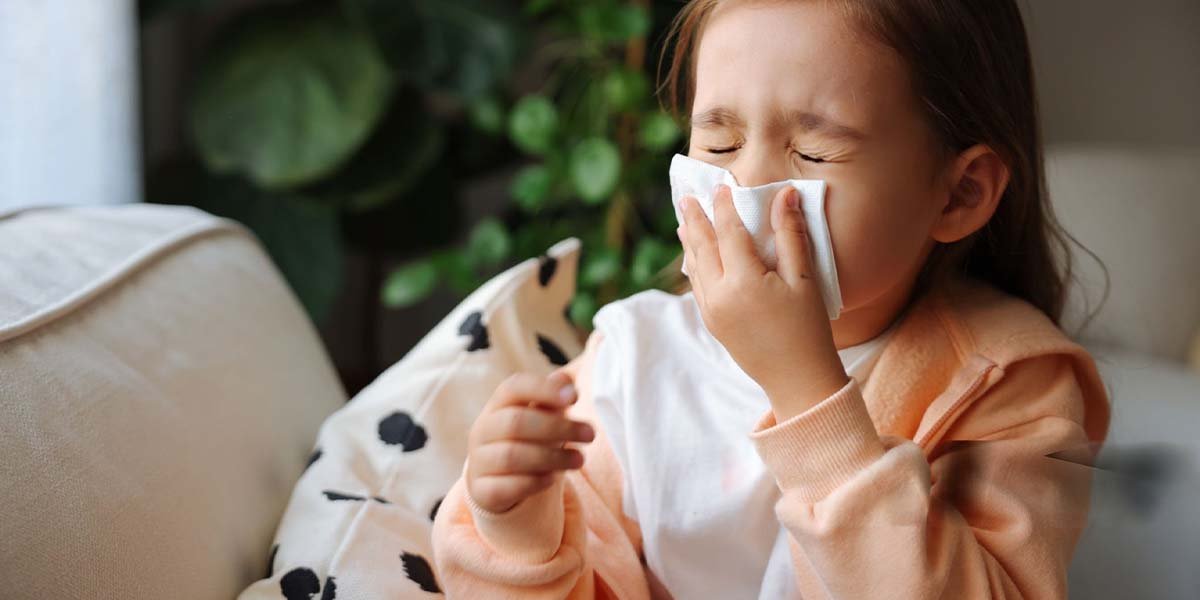
How common: Very common — children can catch up to 8–10 colds per year while their immune systems are still developing.
Typical symptoms:
✔️ Runny or blocked nose
✔️ Sneezing and coughing
✔️ Mild sore throat
✔️ Low-grade temperature
✔️ Reduced appetite
How to help at home:
✔️ Offer plenty of fluids — water and diluted juice
✔️ Age-appropriate paracetamol or ibuprofen for comfort and fever
✔️ Saline nasal drops for blocked noses in babies
✔️ Keep rooms cool and well-ventilated
✔️ Encourage rest
When to see your GP:
✔️ Temperature above 38°C (or 37.5°C in babies under 3 months)
✔️ Rapid or laboured breathing
✔️ Unusually drowsy or difficult to rouse
✔️ Symptoms lasting longer than 3 weeks
NHS resource: https://www.nhs.uk/conditions/common-cold/
2. Ear Infections
How common: Extremely common in children under 5, often following a cold. Most clear up on their own within 3–5 days.
Signs to watch for:
✔️ Pulling or tugging at the ear
✔️ Difficulty hearing or responding to sounds
✔️ High temperature
✔️ Discharge from the ear
✔️ Irritability and disturbed sleep
How to help at home:
✔️ Paracetamol or ibuprofen for pain relief
✔️ A warm flannel held gently against the ear
✔️ Keep the child upright when feeding
✔️ Do not put anything inside the ear canal
When to see your GP:
✔️ Symptoms do not improve after 3 days
✔️ There is discharge from the ear
✔️ Your child has recurring ear infections
✔️ Your child is under 2 and both ears are affected
NHS resource: https://www.nhs.uk/conditions/ear-infections/
3. Chickenpox
How common: Very common and highly contagious. Most children will catch it at some point. Children are contagious from 1–2 days before the rash appears until all spots have fully crusted over — usually 5–7 days after the rash starts.
Typical progression:
✔️ Mild fever and general feeling of being unwell
✔️ Itchy red spots appearing on the face, chest and back
✔️ Spots develop into fluid-filled blisters
✔️ Blisters crust over and scab
✔️ Full recovery typically within 1–2 weeks
How to help at home:
✔️ Calamine lotion or cooling gels applied to spots
✔️ Cool baths to relieve itching
✔️ Trim nails short to prevent scratching and scarring
✔️ Loose, breathable cotton clothing
✔️ Paracetamol for fever — never give aspirin or ibuprofen to a child with chickenpox
When to seek urgent help:
✔️ Difficulty breathing
✔️ Skin around spots becomes very red, hot or swollen (possible secondary infection)
✔️ Child is very drowsy or difficult to wake
✔️ A rash that does not fade when pressed with a glass
NHS resource: https://www.nhs.uk/conditions/chickenpox/
4. Conjunctivitis (Pink Eye)
How common: Very common in nursery and school-age children. Bacterial and viral forms spread quickly through hand contact, making it a frequent visitor to childcare settings.
Symptoms:
✔️ Red, watery or sticky eyes
✔️ Yellow-green discharge (bacterial form)
✔️ Eyelids stuck together on waking
✔️ Gritty or itchy sensation in the eye
How to help at home:
✔️ Gently clean eyes with cooled boiled water and cotton wool, using a separate piece for each eye and each wipe
✔️ Wash hands frequently
✔️ Avoid sharing towels or pillowcases
✔️ Bacterial conjunctivitis may need antibiotic eye drops from your GP
When to see your GP:
✔️ No improvement after 5 days
✔️ Your child is in pain or very sensitive to light
✔️ Vision seems affected
✔️ Newborns with any eye discharge should be seen promptly
NHS resource: https://www.nhs.uk/conditions/conjunctivitis/
5. Hand, Foot and Mouth Disease
How common: Common and becoming more so — NHS searches for this illness rose by 46% in 2024. It is caused by the coxsackie virus and most common in young children. Despite the name, it is not related to foot-and-mouth disease in animals.
What it looks like:
✔️ Mouth ulcers that can make eating and drinking uncomfortable
✔️ Raised red spots or blisters on the hands and feet
✔️ Spots may also appear on the buttocks and legs
✔️ Fever and sore throat in the early stages
How to help at home:
✔️ Offer cool, soft foods and cold drinks — avoid acidic or spicy foods
✔️ Paracetamol or ibuprofen for pain and fever
✔️ Encourage regular fluids to prevent dehydration
✔️ Children can usually return to nursery once their fever has resolved
When to see your GP:
✔️ Your child is refusing all fluids and showing signs of dehydration
✔️ Symptoms are severe or the rash is spreading rapidly
✔️ You are concerned about your child at any point
NHS resource: https://www.nhs.uk/conditions/hand-foot-mouth-disease/
6. Slapped Cheek Syndrome (Fifth Disease)
How common: Slapped cheek syndrome saw the biggest increase in NHS searches in 2024 — rising by 220% to 2.6 million visits. It is caused by parvovirus B19 and is most common in school-age children. By the time the rash appears, children are usually no longer contagious.
Symptoms:
✔️ Bright red rash on both cheeks giving a “slapped” appearance
✔️ A lacy or blotchy rash may spread to the body and limbs
✔️ Mild cold-like symptoms in the days before the rash appears
✔️ Slight fever and runny nose
✔️ The rash may fade and return for several weeks, especially after heat or exercise
How to help at home:
✔️ The illness usually resolves without treatment
✔️ Paracetamol or ibuprofen can ease discomfort
✔️ Keep your child comfortable and well-hydrated
✔️ Children can generally attend childcare once the rash has appeared and they feel well
Important note for pregnancy:
If a pregnant person — whether a parent, family member or member of staff — has been in contact with slapped cheek, they should contact their GP or midwife promptly. The virus can cause complications in pregnancy.
When to see your GP:
✔️ Your child has a weakened immune system or sickle cell disease
✔️ A pregnant person has been exposed
✔️ You are unsure about the rash
NHS resource: https://www.nhs.uk/conditions/slapped-cheek-disease/
7. Vomiting and Diarrhoea (Gastroenteritis)
How common: One of the most common illnesses in young children. It spreads easily through nurseries and schools. Most cases clear up within 5–7 days, but keeping your child well-hydrated is the key priority throughout.
Signs of dehydration to watch for:
✔️ No wet nappies or not urinating for 6–8 hours
✔️ Dry mouth and lips
✔️ Sunken fontanelle in babies
✔️ Unusually drowsy or floppy
✔️ Crying without producing tears
How to help at home:
✔️ Offer small, regular sips of water or oral rehydration solution (available from pharmacies)
✔️ Continue breastfeeding if applicable
Avoid fruit juices and fizzy drinks
✔️ Reintroduce food gradually once vomiting settles
✔️ Keep your child at home for 48 hours after the last episode of vomiting or diarrhoea
✔️ Wash hands and disinfect surfaces thoroughly
When to seek urgent help:
✔️ Signs of dehydration as listed above
✔️ Blood in vomit or stools
✔️ Severe abdominal pain
✔️ Unable to keep any fluids down for more than 8 hours
✔️ Child under 1 year with persistent vomiting
NHS resource: https://www.nhs.uk/conditions/diarrhoea-and-vomiting/
When to Act: A Quick Reference Guide
Treat at Home
✔️ Mild cold or cough with no breathing difficulties
✔️ Low temperature under 38°C in children over 3 months
✔️ Mild diarrhoea or vomiting — child is well-hydrated
✔️ Chickenpox without complications
✔️ Hand, foot and mouth with no high fever
Contact Your GP
✔️ Temperature above 38°C in babies under 3 months
✔️ Symptoms lasting longer than expected
✔️ Ear discharge or recurrent ear infections
✔️ A rash you are unsure about
✔️ Conjunctivitis not improving after 5 days
✔️ You are worried and want reassurance
Call 999 or Go to A&E Immediately
✔️ Difficulty breathing or breathing very rapidly
✔️ A rash that does not fade when pressed with a glass (non-blanching)
✔️ Child is floppy, unresponsive or very difficult to wake
✔️ A seizure or fit
✔️ Signs of severe dehydration
✔️ You are seriously concerned about your child’s health at any point
You know your child best. Always trust your instincts.
For personalised guidance at any time of day, use the NHS 111 online service at: https://111.nhs.uk/
Illness at Nursery: What You Need to Know
Childcare settings follow NHS exclusion guidelines to protect all children in their care. As a general guide:
✔️ Chickenpox — Keep at home until all spots have fully crusted over
✔️ Vomiting and diarrhoea — Keep at home for 48 hours after the last episode
✔️ Hand, foot and mouth — Can return once fever has gone and your child feels well
✔️ Slapped cheek — Can attend once the rash has appeared and child is well
✔️ Conjunctivitis — Seek advice from your childcare provider; bacterial forms may require treatment before return
✔️ Colds and mild illness — Generally fine to attend if your child is well enough and has no temperature
If you are ever unsure whether your child is well enough to attend, contact your childcare provider directly. Open communication helps protect all the children and staff in the setting.
How WMB Childcare Supports Your Child's Health and Wellbeing
At WMB Childcare, we understand that your child’s health and wellbeing are your number one priority — and ours too.
Our setting is built around a safe, nurturing and hygienic environment where children can learn, play and grow with confidence. Here is how we support families every day:
✔️ Paediatric first aid trained staff — All our team hold up-to-date paediatric first aid qualifications
✔️ Rigorous hygiene and infection control — We follow strict NHS-aligned cleaning and illness protocols throughout our setting
✔️ Clear illness and absence policies — We follow published NHS exclusion guidance to protect all children and staff
✔️ Regular communication with parents — We keep you informed promptly if any health concerns arise during the day
✔️ Nutritious, freshly prepared meals and snacks — Supporting immune health and healthy development through good food
✔️ Daily outdoor play — Fresh air, physical activity and nature-based learning every single day
We are transparent, approachable and always here to support you. Whether your child is thriving or going through a challenging patch, our team works in partnership with families to make sure every child feels safe, happy and cared for.
Enquire About a Place for Your Child at WMB Childcare
We would love to welcome your family to WMB Childcare. Whether you are looking for a place now or planning ahead, we encourage you to get in touch — our team is happy to answer any questions, show you around our setting, and discuss what we can offer your child.
To register your interest or arrange a visit, please get in touch with us today.
When you enquire, please feel free to share:
✔️ Your child’s name and date of birth
✔️ Your preferred start date and session requirements (full time, mornings, afternoons or flexible)
✔️ Any specific needs, questions or things you would like us to know about your child
We aim to respond to all enquiries within one working day.
This article is for informational purposes only and does not replace professional medical advice. Always consult your GP or contact NHS 111 if you have concerns about your child’s health.
Sources: NHS England, NHS.uk, Gov.uk | Updated March 2026